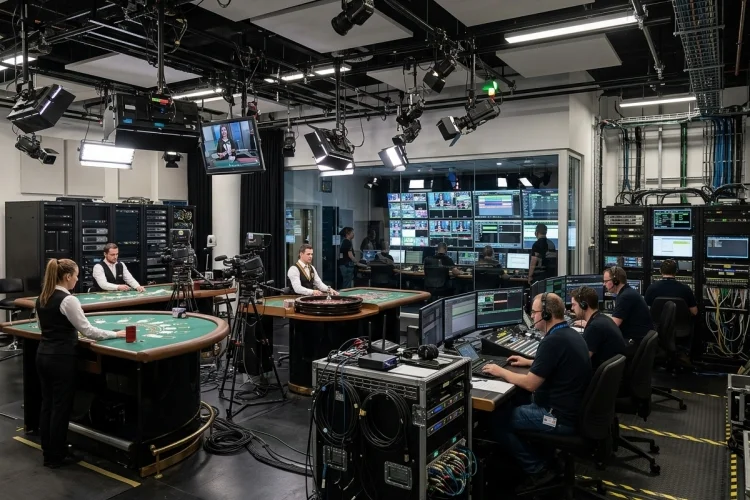
Live dealer blackjack combines the convenience of online gaming with the atmosphere of a traditional casino table.
Instead of playing against computer-generated animations, you watch a professional dealer handle real cards through a live video stream.
The game may look complicated at first because there are betting timers, action buttons, table limits, and several decisions to make.
However, the basic objective is simple: create a hand closer to 21 than the dealer’s hand without exceeding 21. Learning how to play live dealer blackjack begins with understanding card values and the available actions.
You must also check the specific rules of the table because details such as dealer procedures, blackjack payouts, splitting restrictions, and side bets can vary.
Live blackjack still involves financial risk and a mathematical house advantage. No strategy can guarantee a winning session.
Treat the game as entertainment, confirm that online gambling is legal in your location, and decide how much you can afford to spend before joining a table.
Understand the Objective of Blackjack
Every player competes against the dealer rather than against the other people at the table. Your goal is to finish with a higher hand value than the dealer without going over 21.
Number cards from 2 to 9 use their printed values. Tens, jacks, queens, and kings are each worth 10. An ace may count as either 1 or 11, depending on which value benefits the hand.
An ace combined with a ten-value card in the first two cards is called a natural blackjack. A hand that exceeds 21 is known as a bust and normally loses immediately.
The basic objective and card values remain consistent across most blackjack formats, although table-specific rules may differ.
Choose a Live Blackjack Table
Open the live casino section and compare the available tables before placing a wager. Check the minimum and maximum betting limits, game variant, number of decks, dealer procedure, and natural-blackjack payout.
Some tables offer traditional seats, while unlimited-seat formats allow many customers to use the same initial hand and make separate decisions afterward. Speed versions may also let participants act simultaneously rather than waiting for every seat to complete its turn.
Beginners should choose a table with an affordable minimum bet and a comfortable decision timer. Avoid entering a premium or fast table simply because it appears more exciting.
Place Your Main Bet
At the beginning of each round, the interface displays a betting countdown. Select a chip value and place it in the main betting area before the timer reaches zero.
Only wager an amount that fits the budget established before the session. Live tables may also display optional side bets, but these are separate from the main blackjack wager and use different winning conditions.
Once betting closes, the dealer begins dealing the cards. Players normally receive two cards, while the dealer displays at least one visible card. The precise dealing procedure depends on the live product and its published rules.
Learn the Main Blackjack Actions
After receiving the initial hand, the interface presents the actions permitted by that table.
1. Hit and Stand
Choose hit when you want another card. You may continue requesting cards until you stand or the hand exceeds 21.
Choose stand when you want to keep the current total. Your turn then ends, and the dealer later completes their hand according to fixed table procedures.
2. Double Down and Split
A double down normally increases the main wager and provides one additional card. The option may be limited to certain starting totals or situations.
A split may be available when the first two cards form an eligible pair. The cards become two separate hands, and an additional wager is required for the second hand.
Some variants also include surrender, free-double features, cashback decisions, or special rules. Playtech and Evolution products demonstrate how live blackjack variants can add different action options, so the active table instructions should always be checked.
Watch the Dealer Complete the Round
After all player decisions are finished, the dealer reveals or completes the dealer hand. Unlike players, the dealer does not freely choose between actions.
The dealer follows predetermined rules that are listed in the game information. These rules state when another card must be drawn and when the dealer must stop.
Your final hand is then compared with the dealer’s result. You normally win by having a higher valid total, by receiving a natural blackjack when the dealer does not, or when the dealer busts before your valid hand is beaten.
If both sides finish with the same total, the outcome is generally a push and the main wager is returned. Always check the table rules because special variants can modify parts of the settlement process.
Use the Dealer’s Upcard When Making Decisions
Blackjack involves decisions rather than simply waiting for a random outcome. The dealer’s visible card provides important information when deciding whether to hit, stand, double, or split.
A low player total usually needs improvement, while a strong total may be worth keeping. However, totals in the middle require more careful consideration because the appropriate action depends on the dealer’s upcard and the table rules.
A basic-strategy chart can organize these decisions according to mathematical probabilities. Use a chart created for the exact rule set, including the number of decks and dealer procedures.
Basic strategy can reduce avoidable errors, but it cannot predict the next card or guarantee a profit. Each completed hand remains uncertain.
Understand Live Dealer Procedures and Fairness
Live blackjack is conducted with physical cards, trained dealers, video equipment, and game-control systems. Regulatory standards may require commercial-quality equipment, documented procedures, staff training, monitoring, and independent auditing.
The stream allows players to watch the dealing process, while the interface records bets and decisions. A brief video delay does not necessarily mean the game result is delayed because betting data and studio information are handled by the underlying system.
Use only licensed casinos and verify the operator through the appropriate regulator’s official register. A professional-looking studio alone does not prove that the website is legitimate.
Control Your Budget and Playing Time
Choose a fixed session budget and divide it into small, consistent bets. Avoid doubling wagers after losses because a longer losing sequence can make this approach financially dangerous.
Live blackjack moves more slowly than many automated games, but it is still possible to lose track of time. Regulatory standards can require remote operators to provide features that help players monitor session duration.
Take regular breaks and stop when the planned budget has been used. GamCare recommends limit setting, breaks, and self-exclusion tools when stronger control is needed.
Learning how to play live dealer blackjack starts with a simple objective: beat the dealer’s valid total without exceeding 21.
Understand card values, select an affordable table, place the main bet, and use hit, stand, double, or split only when those actions are available.
Because rules vary, read the information panel before every new table. Check the blackjack payout, dealer procedure, splitting conditions, side bets, and minimum wager.
Use basic strategy as a decision guide rather than a promise of winnings. Set strict spending and time limits, avoid chasing losses, and play only through a legally available, properly licensed operator.
Before joining your first real-money table, practice the controls and review the complete rules.